
Globalization has emerged as a defining phenomenon of the contemporary world, intensely influencing economies, cultures, politics, and societies. It represents the increasing reciprocity and interdependence of countries, driven by advancements in technology, communication, and transportation. We’ll try to explore the multifaceted impact of globalization, addressing its economic, cultural, political, and environmental dimensions while considering both its advantages and challenges.
The economic implications of globalization are perhaps the most evident. Globalization has facilitated the free flow of goods, services, capital, and labor across borders, creating a more integrated global economy. This interconnectedness has stimulated economic growth, particularly in developing nations. For instance, countries like China, India, and Vietnam have witnessed remarkable economic transformations due to their integration into global markets. Multinational corporations (MNCs) have expanded their operations globally, creating employment opportunities and fostering innovation.
However, globalization has also exacerbated economic disparities. While some nations and regions have flourished, others have struggled to compete in the global marketplace. Developing countries often face challenges such as exploitation of labor, unequal trade terms, and dependency on foreign markets. Moreover, the dominance of MNCs has sometimes undermined local businesses and industries, leading to cultural homogenization and loss of economic sovereignty.
“Globalization feels like a runaway train, out of control”
Globalization has had a profound effect on cultural exchanges, fostering a sense of global citizenship. Increased communication and travel have facilitated the exchange of ideas, traditions, and lifestyles, enriching cultural diversity. For example, the proliferation of global media platforms like Netflix and Spotify has introduced audiences worldwide to diverse forms of art, music, and film.
However, this cultural amalgamation has also raised concerns about cultural imperialism and the erosion of indigenous cultures. Westernization, driven by the global dominance of Western media and consumer culture, often overshadows local traditions and identities. This can lead to the loss of linguistic diversity, traditional practices, and unique cultural heritage.
Globalization has significantly influenced the political landscape, fostering cooperation and conflict alike. International organizations such as the United Nations, World Trade Organization (WTO), and International Monetary Fund (IMF) exemplify how globalization encourages collaboration to address global challenges like poverty, climate change, and terrorism. These organizations promote dialogue and facilitate the formulation of international policies.
Nevertheless, globalization has also prompted debates about national sovereignty and governance. The influence of global institutions and MNCs sometimes undermines the autonomy of nation-states. For instance, the imposition of structural adjustment programs by the IMF has often been criticized for prioritizing economic liberalization over social welfare, leading to public opposition in affected countries.
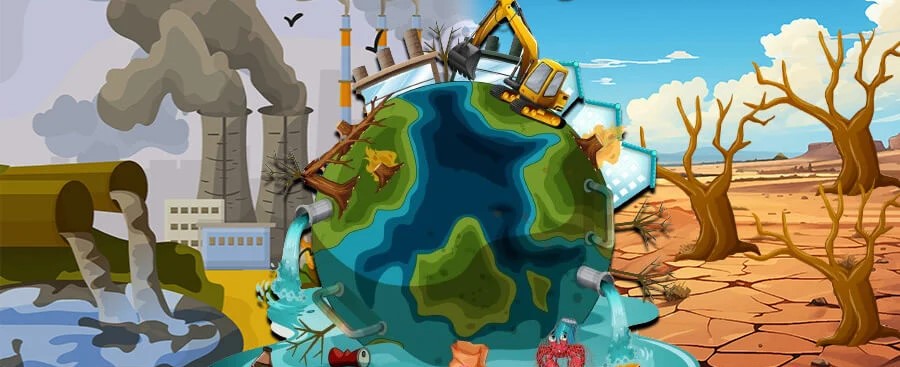
The environmental consequences of globalization are both positive and negative. On the positive side, globalization has raised awareness about environmental issues, leading to collaborative efforts to combat climate change. Initiatives like the Paris Agreement demonstrate how nations can work together to address global environmental challenges. Conversely, globalization has accelerated environmental degradation. The rapid industrialization and increased consumption associated with globalization have led to deforestation, pollution, and overexploitation of natural resources. The global supply chain, while efficient, contributes significantly to carbon emissions. For instance, the production and transportation of goods across continents leave a considerable ecological mark, posing a threat to sustainability
Globalization has transformed social structures and relationships, influencing education, health, and inequality. Access to global knowledge and technology has revolutionized education, enabling remote learning and international collaborations. Similarly, globalization has improved healthcare by facilitating the exchange of medical knowledge and resources.
However, the benefits of globalization are unevenly distributed, often perpetuating social inequalities. The digital divide, for instance, highlights how marginalized communities in developing countries are excluded from the benefits of technological advancements. Furthermore, the erosion of traditional family structures and community ties, driven by urbanization and migration, has sparked debates about the social costs of globalization.
Technological innovation has been both a driver and a beneficiary of globalization. The global spread of the internet and mobile technology has revolutionized communication, commerce, and education. Platforms like e-commerce have transformed business models, enabling small enterprises to access global markets.
Yet, this technological globalization also poses challenges, including data privacy concerns, cybercrime, and the monopolization of digital platforms by a few tech giants. The uneven distribution of technological advancements exacerbates global inequalities, as many regions remain disconnected from the digital revolution.
“It must nestle everywhere, settle everywhere, establish connections everywhere”
Karl Marx
Globalization is a double-edged sword, offering immense opportunities while posing significant challenges. It has fostered economic growth, cultural exchange, and international cooperation but has also led to economic disparities, cultural homogenization, and environmental degradation. To harness the benefits of globalization while mitigating its drawbacks, a balanced approach is essential. Policymakers must prioritize inclusive development, cultural preservation, and environmental sustainability, ensuring that globalization serves as a force for positive change in an increasingly interconnected world.
Muhammad Imran